
Wondering how your retirement savings stack up against the rest of the country? While everyone’s financial situation is different, retirement account balances vary dramatically depending on where you live.
Retirement savings by state
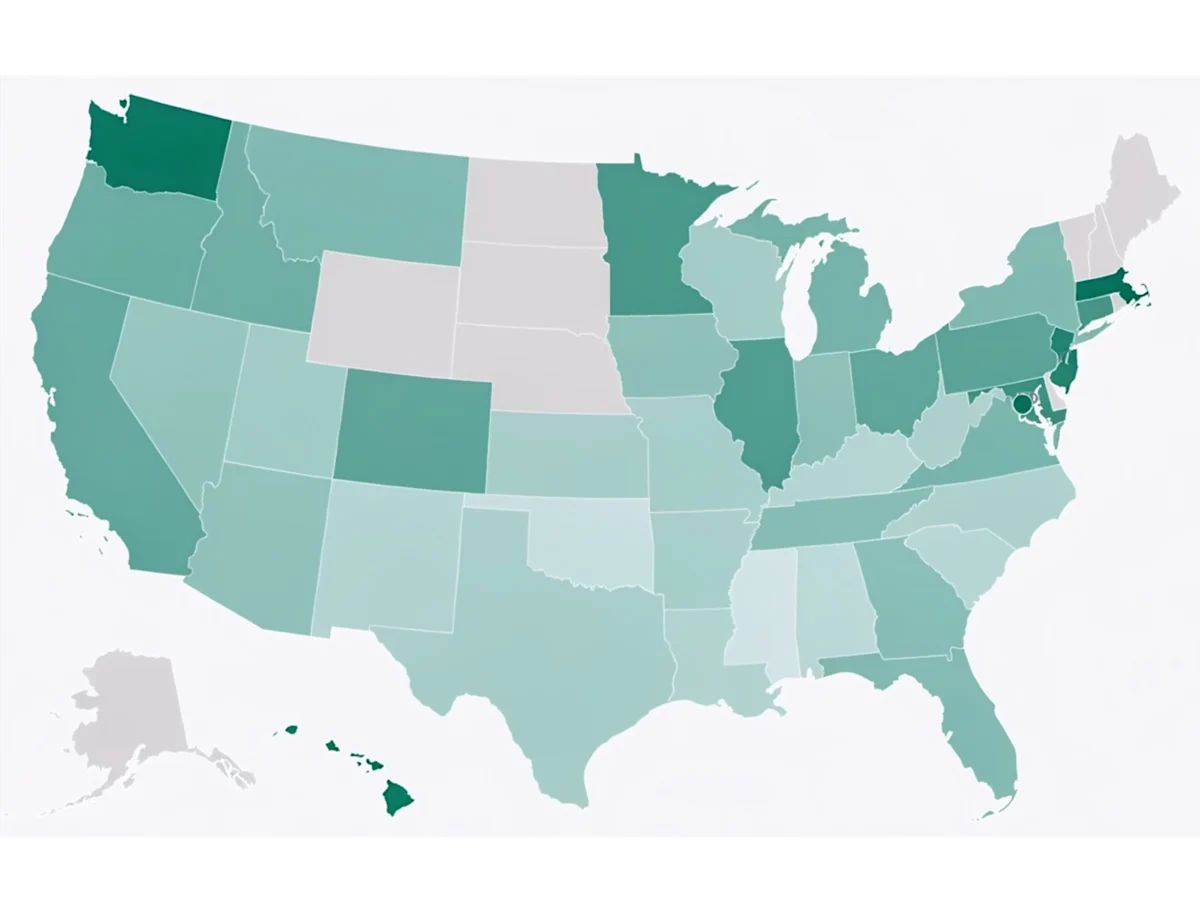
The latest U.S. Census Bureau data highlights where Americans are the most — and least — prepared for retirement. Explore the map below to see how your state compares.
Note: The data in this map is based on median savings; a relatively small number of households with multimillion-dollar accounts can pull the average upward, making it appear that the typical resident has more saved than they actually do. The median represents the midpoint — half of households have more saved, and half have less — providing a more realistic picture of what a typical household in a state has accumulated.
Where you live impacts your retirement savings
Although general guidelines provide a target for retirement savings, several factors can influence how much you need to save for retirement and how long it may take to reach your goal. One of the biggest is the cost of living.
Planning to retire in a relatively expensive state, such as California, Hawaii, or New York, may require a larger nest egg. That’s because higher housing, grocery, utility, healthcare, and transportation costs can increase the amount of income you’ll need to maintain your desired lifestyle in retirement.
The good news: Wages also tend to be higher in more expensive states, which may give workers more money to contribute to retirement accounts. For example, California has the highest cost of living in the country — 10.7% higher than the national average. However, it also has one of the highest average hourly earnings according to the BLS. That said, higher pay doesn’t always fully offset a higher cost of living.
Taxes can further affect how much workers are able to save. For one, the more you earn, the more of your income is taxed. Plus, state income tax rates and rules vary considerably, and some states don’t have an individual income tax at all.
Taxes in retirement also matter, since states differ in how they treat withdrawals from retirement accounts, pensions, and Social Security benefits.
Read more: What to do when your pay raises aren’t keeping up with inflation
States with the most retirement savings
Here’s a look at the states with the highest median retirement savings.
Maryland
In Maryland, the median retirement savings balance is $120,000. The cost of living in this state is 5% higher than the national average. It has a higher median home price of $448,407 — nearly $50,000 higher than the national average, according to Redfin. The top marginal tax rate is 5.75%.
New Jersey
New Jersey came in as the 4th state with the highest retirement account savings at $134,000. The cost of living in this state is almost 10% higher than the national average. It has a higher median home price of $563,000, according to Redfin. This state also has one of the highest top marginal tax rates at 10.75%.
Washington
In Washington, the median retirement savings balance is $143,400 — the third highest in the country. Cost of living is the sixth highest in the US at 7% higher than the national average. The median home price in Washington is a staggering $612,823 and the top marginal tax rate is 7%.
Hawaii
Hawaii’s median retirement savings account balance is $149,000. Along with ranking highly in terms of retirement savings, it also has the second-highest cost of living out of all U.S. states. Median home prices in Hawaii hover just over $722,000 and the top marginal tax rate is 11%.
Massachusetts
The state with the highest median retirement savings is Massachusetts at $150,000. Fortunately for retirees in this state, the average cost of living doesn’t even make the top 5. The cost of living in Massachusetts is 5.8% higher than the national average. The median home price in Massachusetts is $667,628 and the top marginal tax rate is 9%.
States with the least retirement savings
Here’s a look at the states with the lowest average retirement savings.
Louisiana
In Louisiana, the median retirement savings balance is $50,000. However, it also has one of the lowest costs of living in the country at 11.8% below the national average, as well as one of the lowest average median home prices in the nation at $259,977 according to data from Redfin. That’s compared to the national average of $398,771. Louisiana also has a top marginal tax rate of 3%.
New Mexico
In New Mexico, the median retirement savings balance is $50,000. Cost of living in this state sits at 7.8% below the national average. New Mexico’s average median home price is $357,729 according to data from Redfin. This state has a top marginal tax rate of 5.9%.
Alabama
The state of Alabama has a median retirement account savings of $46,000. The cost of living in this state is 11.2% below the national average. Alabama’s median home price is $307,408 according to data from Redfin. This state has a top marginal tax rate of 5%.
Oklahoma
Oklahoma’s median retirement account savings sits at $39,450, the second-lowest of all U.S. states. The cost of living in this state is 12.2% below the national average. Oklahoma’s median home price is $264,062 according to data from Redfin. This state has a top marginal tax rate of 4.75%.
Mississippi
Mississippi took the spot for the lowest retirement savings balance of all states with a median of $35,000. The cost of living in this state is 13% below the national average. Mississippi’s average median home price is $281,002 according to data from Redfin. This state has a top marginal tax rate of 4.4%.
Read more: What is the average retirement savings by age?
How much do you need to save for retirement?
It’s impossible to predict exactly how much you’ll need to retire comfortably because so many factors — from your future expenses to inflation and healthcare costs — can change over time. However, you can build a retirement plan based on what you know today and adjust it as your circumstances evolve.
When deciding on a target savings goal, you should consider:
Desired lifestyle
Where you plan to retire and the day-to-day lifestyle you hope to lead will determine how much you need to save.
Living expenses tend to decrease as people age, but this isn’t always the case. So, it’s important to consider all possibilities when calculating how much you need to feel financially secure in your later years.
Carefully consider your current expenses, how those might evolve over time, and what kinds of new expenses you may face as you age, such as healthcare or long-term care. When thinking about these costs, you should also account for inflation and how that may require that you pad your retirement account with extra funds.
Read more: Is a ‘mini retirement’ right for you?
Streams of income
Your retirement account may not be your only source of income in retirement. For many people, it’s just one piece of a broader financial plan. Social Security benefits, pensions, investment income, inheritances, and other assets can all affect how much you need to save in your retirement accounts. Considering these additional income sources can help you set a more realistic retirement savings goal.
Retirement timeline
If you’re aiming to retire early, this may mean saving more money and saving aggressively from an earlier age to hit your goals on time. However, if you plan to spend more years in the workforce, this will give you a bit more time and flexibility and reduce the number of retired years you need to save for.