It’s the genre so many of our best filmmakers and actors keep coming back to. The based-on-true-life stories of modern icons; those, who, as Steve Jobs described it, “put a dent in the universe” with their work.
And yet, more often than not, modern-day biopic films are disappointments, inert movies that fall into the same narrative traps, leaving audiences cold. Many of them would likely have been better served by fictional films inspired by real-life figures, rather than being a slave to real-life events and the compromises involved with acquiring life rights.
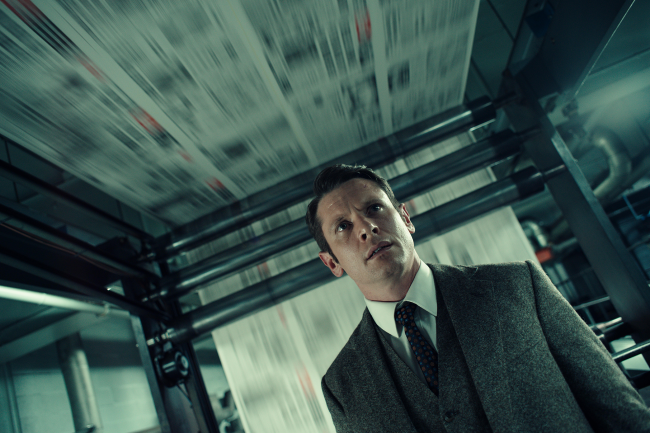
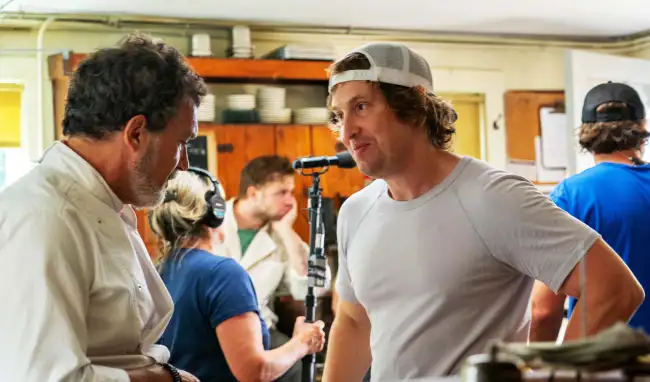
In recent years, Canadian director Matt Johnson has served up two unexpected exceptions to the biopic trap. His 2023 “BlackBerry,” about the rapid rise and fall of the breakthrough smartphone, is a workplace comedy turned late capitalist tragedy with a “Succession”-like lack of reverence for its subjects. And his new film “Tony,” about the summer a young Anthony Bourdain spent working in a Provincetown kitchen, works as a coming-of-age film, regardless if you know its miserable 20-year old protagonist, played by Dominic Sessa, will become the beloved writer, chef, and “Parts Unknown” host.


On an upcoming episode of the Filmmaker Toolkit Podcast, we asked Johnson where he thinks other biopics go wrong, and how he avoided those traps. The following is Johnson’s own words, lightly edited and shortened for clarity.
1. They Are Like Us
I can’t really talk about it from the point of view of other filmmakers who do try to do something that is slightly more expansive, but I will say it really comes down to, for me, less is more.
I think that what people forget is when you’re dealing with anybody larger than life, if it’s Jim Balsillie (Glenn Howerton) at BlackBerry, or if it’s Anthony Bourdain, I love the idea that we actually have more in common with one another than differences. So when I see a movie about one of these dead saints and the movie is trying to tell me, “This person is different than you, bigger than you, smarter than you,” they’re trying to highlight the difference fundamentally that illustrates how you are not them.
My feeling, as I watch that is, “Well, then why am I watching this movie?”

I need movies to tell me how I can live my life better. And even though I’m not always conscious of that as I pick up a book or watch a movie, that’s the game we’re all in here. The game is, “Let’s help each other live a better life.” And that’s why people are addicted to movies, why the medium will never die.
So any movie that tries to say, “Michael Jackson is Michael Jackson, and you’ll never be Michael Jackson,” is, in my opinion, leaving some money on the table. Because the truth is Anthony Bourdain was insecure and shy and scared in all the ways that we all are.
Even though “BlackBerry” is maybe not as emotionally traumatic a story as “Tony,” it is trying to focus on the common humanity that we all share with these people. Because the truth is, when you meet famous people, you realize we are all 99-percent the same.
2. Go in Blind
It’s the same trick I used with “BlackBerry,” and I’m sure I’ll prove this to be wrong at some point in my career, but in general, I try to only make movies about things I know nothing about.
I’m from Toronto and that border really did separate the Anthony Bourdain, I won’t say mania, but the fandom. There are obviously huge Anthony Bourdain fans in Canada, but from my own experience, it really is not the same in my country.

So, I came to it not as a complete neophyte, but as somebody curious, I guess is the best way to put it, where I can look at him as a person, as a cultural artifact, and I can try to investigate, “So, why did he have such an impact on so many people? Why do people love him? And why has he been elevated to this status of sainthood that he is now?”
I had no baggage. It’s not like I was trying to do lip service to details of his life, or where he would go, or [work in] catchphrases that people were expecting to hear, like, “I want to suck the marrow out of the bones of life,” or, “Your life’s not a temple, it’s an amusement park.” There’s these almost catechism style sayings that all the members of the church must know, and I think because I wasn’t coming from that place, it meant that I could do something that was about the common humanity of this guy.
3. Omit the Known Parts
If you ever see my first film, “The Dirties,” it’s about a kid who does a school shooting, and the movie ends right at the moment that the school shooting almost begins.
What I find is if something exists already in the collective unconscious — so whether that is a news story about what a school shooting is like, we’d seen so many, or in this case, Anthony Bourdain’s entire adult persona — if that already exists, I really don’t want to touch it.
I’m not interested in reinterpreting that which already is.
“Tony” opens in select theaters this weekend, and goes nationwide on Friday, August 21.
To hear Johnson’s full interview, publishing on August 20, subscribe to the Filmmaker Toolkit podcast on Apple, Spotify, or your favorite podcast platform.