For a lot of folks in both the US and the UK, “Lord of the Flies” is part of the literary canon. Casting directors Nina Gold and Martin Ware certainly remember reading the William Golding story about a group of school-aged boys who miraculously survive a plane crash on a deserted island, but, without any adults to guide them, slowly (d)evolve into wilder, even murderous, versions of themselves. Gold and Ware needed to find 35 boys willing to crash in Malaysia for months in order to film the new Netflix miniseries version of “Lord of the Flies.” But the complexity of the project matched their enthusiasm for the layers in the story, as brought out by series creator Jack Thorne.


“ It’s quite a personal connection for a lot of people,” Gold told IndieWire about the novel. “ You need plenty of time because there’s no real getting around the legwork of meeting new kids. You also have to factor in the fact that, if you cast them a year before you actually shoot with them, you don’t end up with the same kid that you met a year ago. You also need to have not so much time that they suddenly start driving a car.”
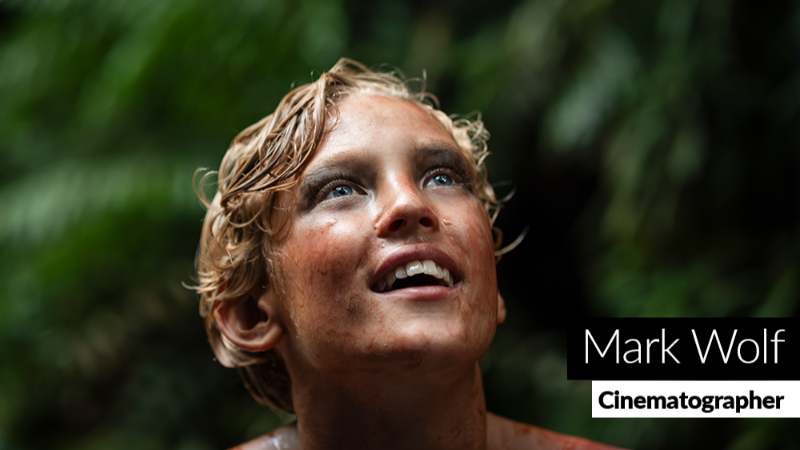
There’s sort of a twisted kind of Goldilocks principle at work in much of the creation of “Lord of the Flies.” The casting team needed time to find young actors, but not too much time. Likewise, the camera team needed to create a show look that was as alluring and mysterious as it was brutal and violent. “[Director Marc Munden] was really, really adamant that it shouldn’t just look like a beautiful tropical island. There’s got to be something threatening about it,” cinematographer Mark Wolf told IndieWire.
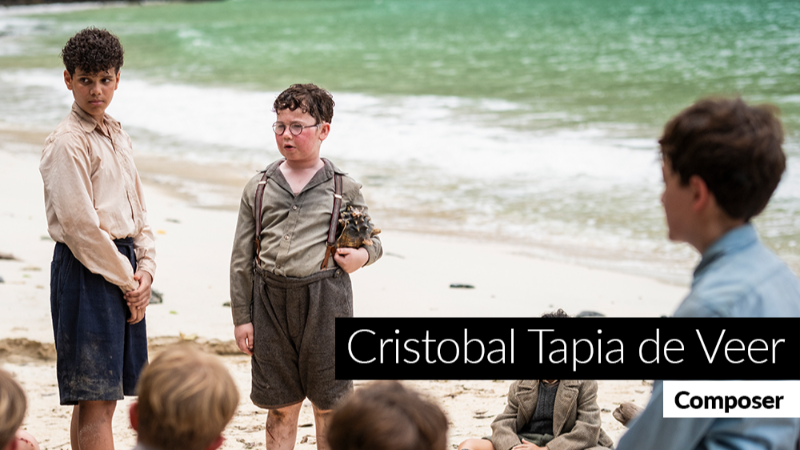
And the music that the series uses — a lot of it from girls’ choirs, not boys — needed to represent the blurring of the boys’ best and worst selves as the island they’re stranded on brings both out of them. The audience needed to see and to hear both. “The job was to represent the transformation the boys go through. So I didn’t feel like this had to be a horror score,” composer Cristobal Tapia de Veer told IndieWire. “These are still boys, and they do horrific things, but they’re very fragile. They truly don’t know what they’re doing, unlike adults. There’s no construction. There’s no architecture. It’s nothing but discovery and violence.”
In the videos below, watch how casting directors Nina Gold and Martin Ware, Wolf and his camera team, and Tapia de Veer’s music all contribute to the discovery and the violence in “Lord of the Flies.”
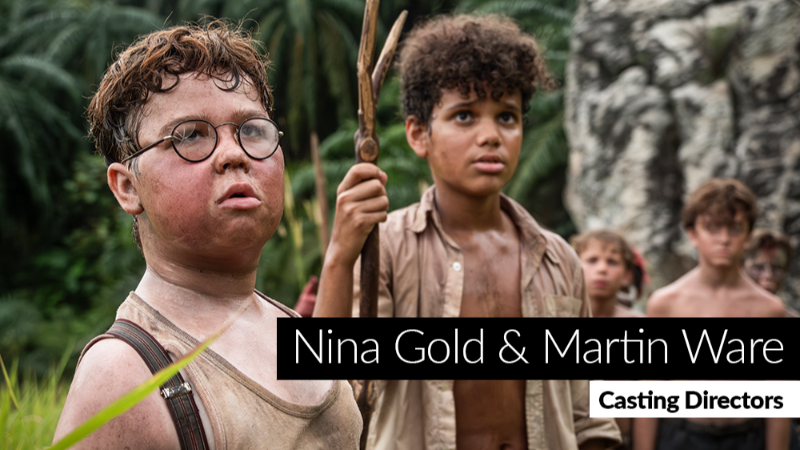
The Casting of ‘Lord of the Flies’
Nina Gold and Martin Ware have cast every kind of world, from Westeros to the Galaxy Far Far Away to the inner sanctum of the Vatican to an unremarkable London pub. But the trouble with a story that is, with only a handful of exceptions, about children is that the pair can’t really lean on their mental Rolodex of actors they know. They have to take the time to discover new ones, going to 100s of schools and reaching out across all kinds of acting clubs and social media posts in order to find young actors who fit the part and also families who fit; the show needed families who would be willing to uproot their lives and at least one parent who could go to Malaysia for months alongside the actors.
There’s no way to shortcut this kind of search, according to Gold and Ware. You just have to dive into it, screening kids first just for the right temperament to be on a set and then for the ability to engage with the story and move audiences. This led to endless Zoom interviews and all sorts of improv games, in addition to reading actors for specific parts. Gold and Ware actually mixed and matched the parts a lot as they auditioned candidates. ”We did have one quite short scene that we just used to read everyone with. A scene with Ralph and Piggy, and Piggy’s having trouble climbing, and they have a small little power play in the course of about 12 lines,” Ware told IndieWire.
That ability to read power, status, and the violence of it shifting was crucial across the series for most of the main roles. The boys may not have language for it, but they can feel it happening. And Ware and Gold knew they’d found the right actors when they could feel it, too. In the video above, watch how Gold and Ware matched the right young actors to the main roles in “Lord of the Flies.”
The Cinematography of ‘Lord of the Flies’
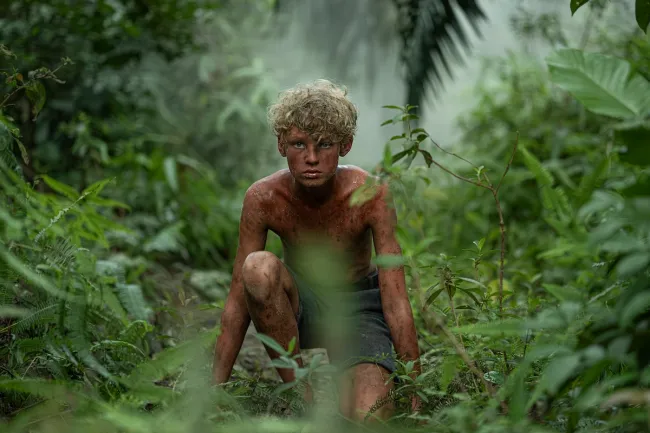
According to cinematographer Mark Wolf, the first shot of the series is a pretty good introduction to the ride the audience is about to go on. It’s of Piggy (David McKenna) waking up on the island after the plane crash and wandering through the jungle until he finds Ralph (Winston Sawyers).
Wolf is a veteran not just of scripted features and TV but of nature documentaries — and not just nature documentaries but Sir Richard Attenborough’s “Blue Planet” — so the DP knows how to visually imbue a natural landscape with strong emotions. He chose an 18m wide lens for the opening shot to slightly distort everything we see and really put us with Piggy, or Nicky, trying to get a handle on this place that is hostile, lush, and unmistakably alive. ”The lenses played a huge part in the aesthetic. On the island, I chose to shoot everything on anamorphic, and I chose to shoot all the flashbacks on spherical, ’cause I wanted to create a completely different look for the island and make it their own world,” Wolf said.
One of the most striking choices Wolf made to visually make the island seem like its own world, one with a psychological power that eats away at the boys stuck there, was his use of infrared. Based on techniques by the photographer Richard Mosse, Wolf used an infrared Kodak film called Aerochrome, along with some filters, on a RED camera to signal danger in trees the infrared rendered vividly red. “The infrared we used restored all the skin tones, so it didn’t have that kind of ‘Blair Witch’ look,” Wolf said. “The colors, kind of the red and the greens there, are really what stand out, and we try to kind of heighten those.”
In the video above, watch how Wolf heightened the visual language of the show over the course of the miniseries to create an unraveling that looks as unnerving as it feels for the characters.
The Score of ‘Lord of the Flies’
Cristobal Tapia de Veer certainly knows how to hint at primal urges hidden beneath a civilized veneer and how that can break through the heat of a tropical island. But while he’s worked on projects that have superficial similarities to this one, and worked with writer Jack Thorne and director Marc Munden before, he wasn’t supposed to score “Lord of the Flies.” He initially consulted with Munden about the trajectory of the music on the show, but scheduling didn’t look like it was going to work out.
Then, a delay allowed Tapia de Veer back into the project — the most exciting thing for the composer wasn’t necessarily the setting or the sound of “Lord of the Flies.” It was the arc that the music goes on alongside the characters. “ They land on this island, and [we hear] all this classical music. But as the story progresses, things begin falling apart, and things become chaotic, and they become really primitive and savage,” Tapia de Veer said. “ When there are peaks of madness, when you see all these boys with makeup running in the woods in a slow-motion manner, it’s like this deep chaos happening.”
Tapia de Veer does almost as much to set up the island as a character as the remote Malaysian island locations do. He delighted in crafting a more structured, ordered sound for the first couple of episodes when the boys try to recreate the Western World they know on the beach where they’re stranded, very close to the source music by composer Benjamin Britten used in the show. Then he took all those nice strings and all those ordered measures and broke them down. “I used choirs, children’s voices. Sometimes the kids are really yelling, literally. So you can feel some sense of harmony and a little melody here and there, but it’s more like pure expression,” Tapia de Veer said.
In the video above, watch how Tapia de Veer’s pure musical expressions help push the children in “Lord of the Flies” over the edge, and help us understand how their emotional chaos could so easily also be ours, too.
Presented in partnership with Netflix.