
Like her previous film, the generational epic “Bones of Crows,” which explored the traumatic echoes of Canada’s residential schools, writer/director Marie Clements’ latest film, “How We Stand,” is an ambitious effort that again seeks to examine hidden and violent sociopolitical aspects of recent Indigenous history through a deeply personal lens.
Setting her film first in Oklahoma in the 1950s and later in 1973 Los Angeles, Clements uses the story of three orphaned sisters — Jessie (the always great Amber Midthunder), Miranda (Alyssa Wapanatâhk), and Janey (Isabel DeRoy-Olson) — to explore the trauma inflicted by the federally backed Indian Relocation Act of 1956, which lured many Native Americans from their ancestral lands into cities without a safety net, the mass sterilization of Native women between 1970 and 1976, which was carried out in secret by federally funded health clinics, and the damaging effects of the negative depictions of Native Americans in classic Hollywood films.


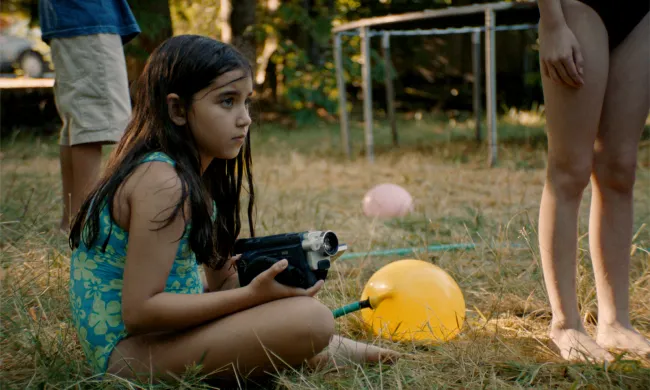
We first meet the sisters as young girls in post-Dust Bowl Oklahoma, where their mother Angela (Cara Jade Myers) does her best to make do without their father, who it’s implied was killed during WWII. This is “Grapes of Wrath” territory; everything is washed out, dusty, and worn to the bone. When she sees a flyer for a relocation program to Los Angeles that promises help with rent and guaranteed employment, Angela sees it as her last hope for a better future for her girls. Swiftly, they pack up a truck and head off to the West Coast, dreams of sunshine in their eyes.
Of course, when they arrive, they find the relocation program’s golden promise is nothing more than a single room in a dilapidated shack, help with one month’s rent, and a note that, unfortunately, no job offer is waiting for Angela. All they have is each other, and the community around them. However, when Angela takes the girls to a secret community dance in the tunnels under the L.A. River, the event ends in tragedy when it is raided by the police, and Angela loses her life. We don’t see the girls again until 1973, at which point they have been separated by the foster system and gone down drastically different paths.
Over the next few days, the story ebbs and flows between the lives of the girls, now grown women, navigating treacherous waters: white America in the 1970s. Clements sets the scene with lively pop music and excellent period-specific costuming, though darkness lurks beneath the funky 1970s groove. The youngest Janey, who was just a baby when her mother was slain, has been subjected to an unknown medical trauma. We see her disoriented as she wanders the streets, eventually making her way to a store called The Vanishing Indian, where she gazes at a display depicting the Lone Woman of San Nicolas Island.
Arrested, she sees visions of the woman as a police psychiatrist (Gil Billows) tries to figure out what happened to her. At the same time, Miranda, now an activist, arrives at an audition for a western film, whose director Bob Stills (Eric Johnson) is obsessed with Native culture, despite directing racist films with titles like “The White Man’s Revenge” and “The White Cowboy Hat.” Finally, we catch up with Jessie, now a doctor, who is about to begin her residency at the free women’s clinic run by her white husband Daniel (Darren Mann).
The insidious racism of each of these seemingly well-meaning white men is slowly revealed as the sisters continue to engage with them. Trying to relate to Janey, the psychiatrist describes his grandfather’s “Indian room,” which was filled with artifacts and other ephemera his ancestor had “collected” over the years (including, it’s implied, during the era known as the Indian Wars). “I was afraid of the violence in that room,” he confesses to Janey, although we later learn he is still the caretaker of his grandfather’s abhorrent collection.
As he flirts with Miranda, director Bob shares that when he played cowboys and Indians as a child, he always wanted to play the Indian. When she asks why, he says “to be free,” but then goes on to describe with relish the stereotypical violence that Native characters would inflict on the white characters in westerns. Jessie’s husband refuses to defend her when the casual racism of his parents (Michael Shanks and Helen Shaver) cuts her like a knife. Later, we learn he’s harboring an even darker secret that reveals a much deeper, dehumanized racism lies in his heart.
While Janey is haunted by her past and Miranda wears hers proudly, Jessie has done her best to assimilate into mainstream white culture, having been adopted by a white Canadian couple. Midthunder is fantastic as we watch the teflon she wears begin to crack, first when the nurse at her husband’s clinic, a woman billed as Beige Edith (Mary Walsh) speaks to her like she doesn’t understand English on her first day, and later during the incident with his parents. At one point, when a patient asks Jessie if she’s Indian, she says “technically,” but that she doesn’t feel like an “Indian woman” because of her adoption. The woman pushes back at that, telling her, “The only way you’re going to know yourself is to find your family. There’s always a way back.”
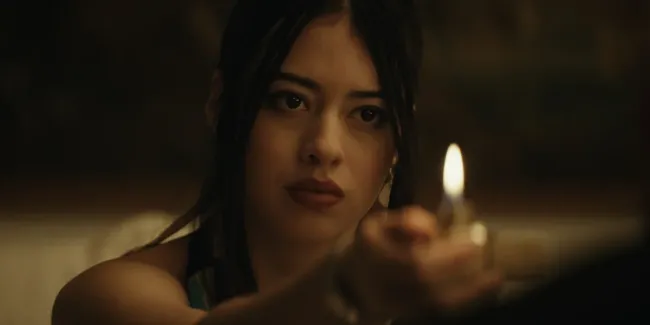
Although Clements’ dialogue is sometimes clunky and didactic, these interwoven sequences work thanks to the strength of her cast. Midthunder brings a steely intelligence to Jessie, often saying more with her expressive eyes as she reacts to the increasingly racist situations she finds herself in than words could articulate. Although Wapanatâhk’s Miranda is a tough cookie, her wounds show through the unwise choices she keeps making, her conflicting inner world again expressed through her penetrating gaze and uneasy chemistry with Johnson. DeRoy-Olson has the most difficult task, first with depicting Janey’s psychotic break, then in the latter half of the film tying the narrative into a neat bow as she confronts the psychiatrist in his own home. While she walks this delicate line admirably, the plotting of her sequences definitely wobbles into overly melodramatic territory, so viewers’ mileage may vary.
As the three storylines come to a head, Clements leans heavily on magical realism, bringing to life the dioramas in the “Indian room” peppered throughout the film. Here Janey takes her agency back, confronting the passive racism of the psychiatrist who will acknowledge his grandfather’s past misdeeds, while at the same time maintaining his violent legacy in the name of preserving history. Here Clements, too, reclaims the iconic image of the L.A. River culvert, which has a rich cinematic history itself in crime movies like “Drive” and “Point Blank.” As she brings the girls back to the place of their greatest trauma, a flood of tears from the generations who came before them washes away the collection, ushering the sisters into a new future where they can stand strong, together.
Grade: B+
“How We Stand” premiered at TIFF. It is currently seeking U.S. distribution.