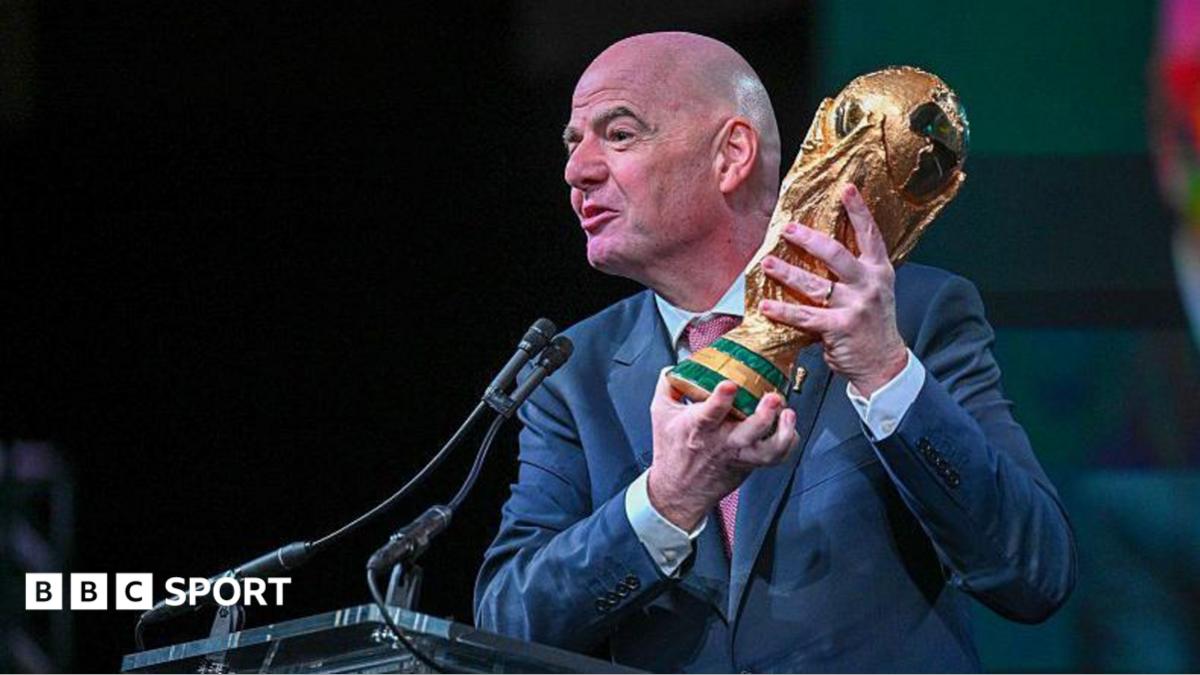
Infantino came to wider public attention, and attracted further criticism, during this summer’s World Cup, which was staged in the USA, Mexico and Canada.
The tournament made headlines before a ball was kicked, with visas to the United States delayed – and even denied – for supporters, coaching staff and officials.
In May, Iran’s base for the tournament was moved to Mexico after the US made it clear it did not want to host the team because of political tensions between the two nations.
That was followed by Somali referee Omar Artan, one of 52 officials appointed to work at the tournament, being refused entry when he arrived at Miami International Airport.
Fifa refused to intervene on Artan’s behalf, saying it was “not involved in the host country’s immigration process”.
When the football did begin, Infantino’s relationship with Trump was thrust into the spotlight when the US president asked Fifa to review Folarin Balogun’s one-match suspension.
US forward Balogun was sent off during the last-32 tie against Bosnia-Herzegovina but was cleared to feature in the next round after an unprecedented intervention from Trump, which drew widespread criticism.
The fallout from the World Cup continued as Fifa opened disciplinary proceedings against Argentina over its behaviour after the final defeat by Spain and throughout the tournament.
The controversial plan to sell stakes in the organisation’s major competitions prompted Uefa nations to agree to boycott all future Fifa competitions then led to one of Infantino’s senior advisers resigning.
The plans would have allowed Fifa to create a commercial subsidiary to run its main events. External investors would then have been able to buy stakes in the company.
Fifa’s chief operating officer Kevin Lamour said the governing body’s own administration had been “deceived” about the project and UK Prime Minister Andy Burnham described Infantino as “the wrong man” to lead Fifa.
After a further two major confederations spoke out, Infantino released a statement saying it would no longer proceed with the plans, adding it had become clear the project had “created divisions” that are “no longer in the interest” of its original objective.
Uefa’s response was damning – saying it had lost confidence in Infantino’s leadership.
Despite the controversies, Infantino has made a clear difference to many football nations around the world. Yes, it is about money. But money for football.
He has enriched some of the poorest and smallest nations, proving funding through infrastructure and development.
And Fifa has been transparent in publishing the salaries of all top executives and keeping funds within football.
After being re-elected unopposed in 2019 and 2023, he is approaching another election year in 2027.
Infantino will be able to stand again, even though Fifa statutes limit the president to a maximum of three terms.
Only time will tell whether that comes to pass.
A version of this article was first published in February 2026