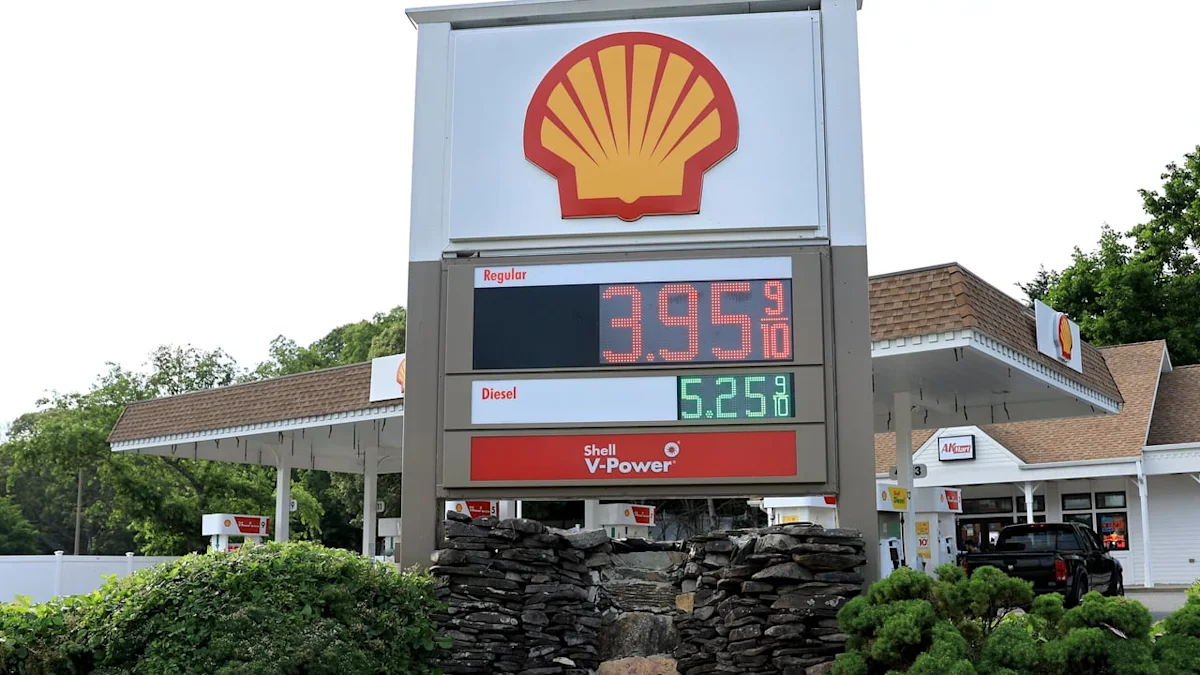
The national average price for a gallon of regular gasoline fell below $4 on Thursday for the first time since late March, as the United States and Iran signed an agreement to reopen the Strait of Hormuz and end hostilities.
According to The New York Times, AAA recorded the national average at $3.999 per gallon, a drop of roughly three cents from Wednesday’s $4.03. GasBuddy, a separate tracking service, put the price at around $3.98. Among the 28 states that had already crossed the $4 threshold downward, Indiana recorded the cheapest statewide figure at $3.40.
Despite the milestone, gas prices remain about a third higher than before the war began, and experts say a return to pre-war levels is unlikely any time soon. Before the first U.S.-Israeli strikes on Iran in late February, the national average hovered just below $3 a gallon. Prices peaked at $4.56 on May 21 as Middle East energy supplies tightened and crude oil briefly approached $120 a barrel.
Restoring normal tanker traffic through the strait is a process that could stretch three to four months, Kpler lead oil analyst Matt Smith told CNN, with rebuilding the stockpiles drained by the conflict requiring still more time beyond that. Regional energy infrastructure compounded the problem: refineries and production sites went largely offline as the fighting disrupted supply lines, and damage to some facilities means bringing them back to capacity will require additional time.
Even with crude prices falling, gasoline prices tend to drop more slowly than they rise. Tom Kloza, an independent oil analyst who advises Gulf Oil, invoked a long-standing industry saying: “There’s an old expression — gas prices go up like a rocket and come down like a feather.” Since the May 21 high, pump prices have eased at a pace of roughly two cents per day — a crawl relative to the more than one-dollar surge that hit consumers in the opening weeks of the conflict.
Futures markets, which exert the greatest pull on what consumers pay at the pump, are not pricing crude back below the pre-war $70-per-barrel mark at any point this decade. Analysts note that global fuel stockpiles have been drawn down to multi-decade lows, raising the prospect of another run above $4 at the pump as summer driving demand builds. Dan Pickering, who founded Pickering Energy Partners and serves as its chief investment officer, put the outlook plainly: “We’ll figure out what the new normal is. But it isn’t going to be $2.85 gasoline.”
The U.S.-Iran memorandum of understanding, which President Donald Trump warned is “not final” and could be reversed if Iran does not comply, halts hostilities for 60 days while creating a framework for follow-on talks. Tanker traffic in the strait resumed earlier this week, with at least three Iranian vessels clearing the U.S. Navy blockade — the first outbound shipments since the blockade was imposed two months ago.