AI is impact investing’s biggest test and its biggest opportunity, says Leapfrog chief
The global impact fund industry has faced its share of hard questions, whether it’s over greenwashing, misaligned incentives or returns that rarely materialize. Now it faces a harder one: what to do about AI?
Andy Kuper, CEO and founder of LeapFrog Investments, thinks he has an answer. His firm has put close to $3 billion behind a single thesis: that emerging market consumers, not Silicon Valley, are the real winners of every technology revolution, and that AI will be no different.
PitchBook News spoke with Kuper, who is based in Sydney.
This transcript has been edited for brevity and clarity.
How has the year been for LeapFrog so far, and what were some of your takeaways?
We had a very strong year in 2025. Currencies were relatively stable. There was continued growth in our markets. Our flagship funds were up last year on average by 17-18%. Our companies have generated $9 billion in total revenue and $1.5 billion in profits. Now we have the Iran war, so the question is, how does that disrupt what was essentially a big upswing until now?
How challenging will it be to exit now versus previous cycles you’ve seen?
Kuper.png
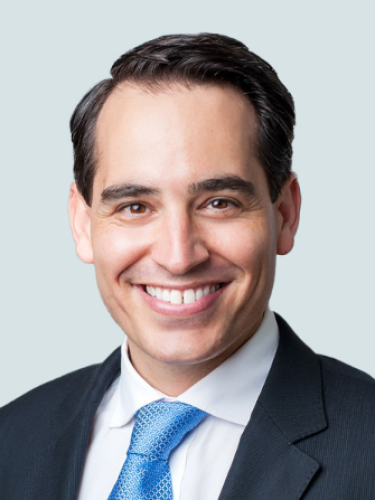
Andy Kuper, CEO and founder of LeapFrog Investments
Courtesy of LeapFrog Investments
I continue to see this as a cycle where multiple exits will occur. LeapFrog has a number of exit processes currently running. We’ve seen a few buyers affected, but on the whole there’s still a lot of optimism, and that’s reflected in the public markets.
We continue to see institutions seeking exposure to private companies in India, Vietnam, even Nigeria and Kenya, which are growing very fast.
Even if India goes from 8% to 6-7% annual growth—or if Vietnam goes from 10% to 8%—it’s still far beyond the 1% growth seen in parts of Europe, for example. I think that’s very compelling. Our companies at LeapFrog are growing about 22% a year. We have companies growing at 30-60% a year.
So the big strategics—whether it’s insurers, healthcare providers or energy companies in Africa, South Asia or Southeast Asia—are now saying: ‘I’m not going to go and invest in Texas or Germany, I’m going to go to my neighborhood and invest in India, Vietnam, Indonesia, or Kenya.’ This turns into the intra-regional strategic appetite we have seen go up quite a lot.
There is substantial Japanese and Chinese money going into Africa. Several European and Middle Eastern players are doing deals in Asia. This is a secular trend that isn’t going away and will continue to accelerate, because diversification is one of the accelerated priorities for alternatives in this new world.
How have LeapFrog’s 2018-2021 fund vintages performed given the previously high valuations?
If you look at the merger that [Indian small finance bank] Fincare did with AU Small Finance Bank, it got our investors over 3x their money. Fincare was from that era of investing.
It depends on where you invest. If you look at India and the US now, the IPO markets are open. So the assets that got to sufficient scale through that period have a lot of paths out now. Where people bought things that were subscale, or not that technology-enabled, they are going to have a harder time with exits.
We were able to do some pretty exciting deals that we got very decent pricing on. That will help with returns for this more recent vintage of funds and investments.
I also don’t see the US staying on the sidelines over the long term. They’re just going to have to do it. So I wouldn’t be misled by the reduction in climate investing from the US market, where people are investing in energy transition and finding different words to label it. That’s going to continue.
What role do you see China playing in the global climate sector?
China has shown an incredibly impressive commitment to policies and public support for the development and democratization of technologies. As you know, the cost of producing things like solar panels is so low that they dominate huge portions of the market.
I continue to see supply chains diversifying outside China, but the Chinese supply chain is going to be incredibly important.
We see quite a number of Chinese investors make investments in growth-stage companies in our markets because they’re seeing the major buyers of what Chinese companies are supplying, whether it’s solar panels or batteries. So it makes sense for them to go further into the supply chain and capture more value there.
AI is seen as a threat to jobs and livelihoods. How does that square with LeapFrog’s focus on financial inclusion and employment?
The people who have benefited the most are emerging consumers in Kenya, India, Indonesia, and producers.
These people have leapfrogged into the 21st century, where they’ve got enormous access and growth, their children [are] getting educated, they are part of the global economy, and their prospects have transformed. If you look at the past 20 years, their incomes have gone up vastly, more than even the tech folks.
So if you think about that, you’ve got to be a bit wary of the idea that all the benefits of this next technology revolution of AI are going to be captured by the owners of that technology.
One of our portfolio firms is SoftLogic in Sri Lanka, the largest health insurer and second-largest life insurer in the country. They have moved through their AI assistant to process insurance claims. How fast are they? They are processing 97% of claims in the first 24 hours.
They grew premiums by 20% last year. Their customers are having a really positive experience.
These companies are fundamentally reshaping to create greater growth and more employment. It is disintermediating a whole lot of expensive middlemen and friction, such that the companies can grow more, provide better services, higher profits, and therefore employ more people.
That’s why we see a positive cycle from our companies around jobs that we reported in our annual impact results. This is very counterintuitive to what we’re told about this trade-off concerning AI and jobs.
This whole world is going to be transformed. It is a mistake to think about it in terms of the efficiency of current businesses versus actually seeing the categories that are going to win here and how many jobs are going to be created.
Edwards Lifesciences has been hit with a $10m penalty to settle a court ruling that determined the company violated antitrust law in its acquisition of […]
Pzena Investment Management recently released its first-quarter 2026 commentary for “Pzena Focused Value Strategy.” A copy of the letter can be downloaded here. The equity […]