This week will be remembered as the start of the Great Creator Gold Rush. I don’t need to repeat the Curry Barker or Kane Parsons backstories or their box-office headlines, which have been captured ad infinitum. The feeding frenzy is on.
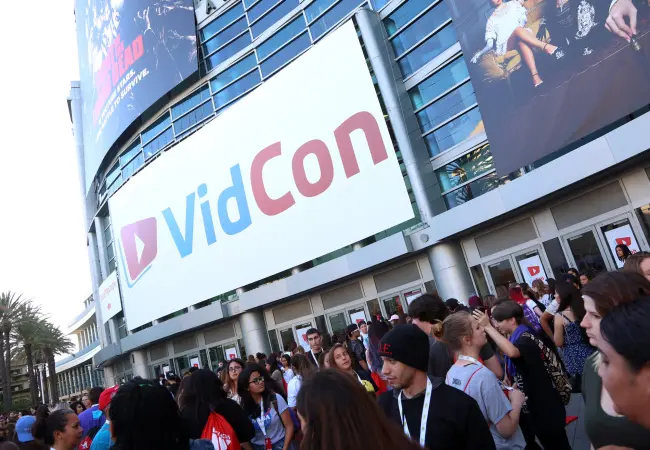
VidCon, the annual online video tech convention that rolls around at the end of June, will be besieged by agents and producers seeking the next great YouTube auteur. And I’m sure they’ll find some.
For those who may want to be among their numbers (and even for those who don’t), I want to foreground a framework for understanding this shift, and it’s not YouTube Is Now Indie Film or Audiences Want Original Movies or even This Proves Homegrown Fandom, although all of those things may be true.


There’s an even larger force in play, and here it is: Institutions will try to preserve the problem to which they are the solution.
That wisdom isn’t mine. It’s The Shirky Principle, from author Clay Shirky, who was smarter about and earlier to the internet than all of us. Nearly a century earlier, Upton Sinclair had his own version: It is difficult to get a man to understand something, when his salary depends upon his not understanding it.
The institution in this case is legacy Hollywood, which is giddy to see this young, fresh source of box-office sunshine finally streaming in.
Right now, everyone wants to be the next Blumhouse or Atomic Monster: Atomic clocked the rise of the Kane Pixels YouTube channel (thanks to an assistant at 21 Laps) and Blumhouse saw the potential in Barker’s short “The Chair” and his $800 feature “Milk and Serial.”
I don’t want to diminish their contributions to the success of “Backrooms” and “Obsession” — or those of A24, the Chernin Group, or Focus Features, legacy companies all.
However, history tells us that the first thing that Hollywood tries to do with a blockbuster is figure out not only how to do it again but to also turn it into a reliable pipeline — preferably one that can start to deliver in Q4 2027.
This is not going to happen.
Barker and Parsons built in public, for audiences that chose them. The craft developed in the open — on platforms with instant feedback, with communities that watched every iteration, with the kind of creative pressure that comes from knowing your next upload lives or dies on whether people care to watch.
It’s a development process, but it’s not one that would survive a Hollywood development deal with its inorganic infrastructure of money, expectations, and deadlines. Instead of building for the people who will watch, it’s building for the gatekeepers who will let you make it.
It’s easy to draw the parallel that these filmmakers (like Markiplier, who dodged all the gatekeepers) had YouTube audiences. They do, it they also have specific, hard-won creative identities that audiences recognized as real.
Barker’s horror sensibility was built over years of iterating in public. Parsons’ “Backrooms” universe has internal logic and genuine atmosphere that came from episode-by-episode development. Markiplier earned his audience through a decade of showing up, being himself, and making things for his audience.
It worked, but none of that has anything to do with the way Hollywood works. And odds are, Hollywood will try to woo creators to its way of thinking rather than change the way it works.
As “Backrooms” and “Obsession” prove, Hollywood can excel in marketing and maximizing an artist’s work. Hollywood is also notoriously crap when it comes to prioritizing the audience; executives’ jobs depend on proving their own value to the process.
To be fair, it’s hard to imagine what change could look like. Maybe providing money for development in exchange for a first-look deal and an iron-clad promise to leave them the hell alone?
Worst-case scenario, Hollywood will see YouTubers = built-in audience = reduced marketing risk, followed by seeking the next Barker, Parsons, or Markiplier by subscriber counts.
Number are a lagging indicator of what matters, which is whether someone has developed genuine creative authority with a specific community over time. Creators who get sucked into bad deals in the next 18 months will be the ones who mistake Hollywood’s sudden interest for validation.
My unsolicited advice: Please know that Hollywood is trying to import an asset it doesn’t know how to build internally. That’s leverage and should be treated as such.
Studios see what’s happening as a watershed and they’re right, but a watershed moment for studios means an opportunity to acquire. For filmmakers, it means negotiating power at a moment when the system needs them more than they need it.
The question for every creator-filmmaker now entering this conversation is: What are you giving up, and at what moment in the leverage cycle are you giving it up?
This is a story about audience-first independent filmmaking, and the platforms are incidental. What Barker, Parsons, and Markiplier built is a version of what the independent film movement has always theoretically valued — work developed outside the studio system, connected to real audiences, with a filmmaker’s singular vision intact.
The difference is that their platforms gave them direct feedback loops and direct distribution that the old indie model never had. Sundance could make a career. YouTube can build one continuously, in public, without asking permission.
The festivals have been disintermediated as the primary proof-of-concept engine for a certain kind of filmmaker. The new proof of concept is 78 million views and a community that already knows your name.
That’s a different independent film. It has nothing to do with the old models. It doesn’t need a standing ovation to know it’s working.
Weekly Recommendations curated by IndieWire Managing Editor Christian Zilko
5. Oscar Boyson and Alice Maio Mackay on Connecting with Fans by Max Cea
Two of the most interesting voices in independent film today break down a realistic path to building audiences in an increasingly fragmented landscape. Boyson (who directed “Our Hero, Balthazar”) and Mackay (whose frequent microbudget features, including “The Serpent’s Skin,” are regular hits at genre festivals) represent two different paths to indie success, and their combined perspectives are invaluable.
The synthesis of online creators and legacy Hollywood infrastructure appears to be the topic of the year, and could join A.I. as one of the trends that defines the entertainment industry in the 2020s. This recap of a recent symposium offers another inside look at the questions facing both the studios and the creators’ sides of the debate.
3. Nothing’s Going to Stop Us by Set Hernandez and Maysoon Zayid
A case study about how audience desire for issue-based filmmaking is often much higher than gatekeepers would have you believe. Hernandez and Zayid break down the success of their documentary “Unseen,” using data to illustrate the value of positive portrayals of disabilities and explaining the directions that their careers are taking next.
2. 50 Film Festivals Worth the Entry Fee in 2026 by Tim Molloy
MovieMaker’s annual list of festivals worth submitting to has long been an essential tool for filmmakers trying to craft their festival strategies. Even as the indie film landscape evolves, most feature filmmakers are still submitting their work to some festivals, and the list continues to be a useful annual check-in for anyone thinking about how to market their next project.
1. The Three-Minute Pilot by Jon Stahl
Hollywood creatives have always thrived with constraints, particularly in television. The once-rigid 22-minute episode formats forced writers to perfect the science of narrative structure, character development, and comedic timing. Now, Stahl argues that the prevalence of short-form online content could lead to a similar renaissance if writers embrace the opportunity to hone their crafts around the constraints of the format.