Marilyn Monroe’s 100th birthday occurs on June 1 this year — and a new book invites you to relive her life in photos.
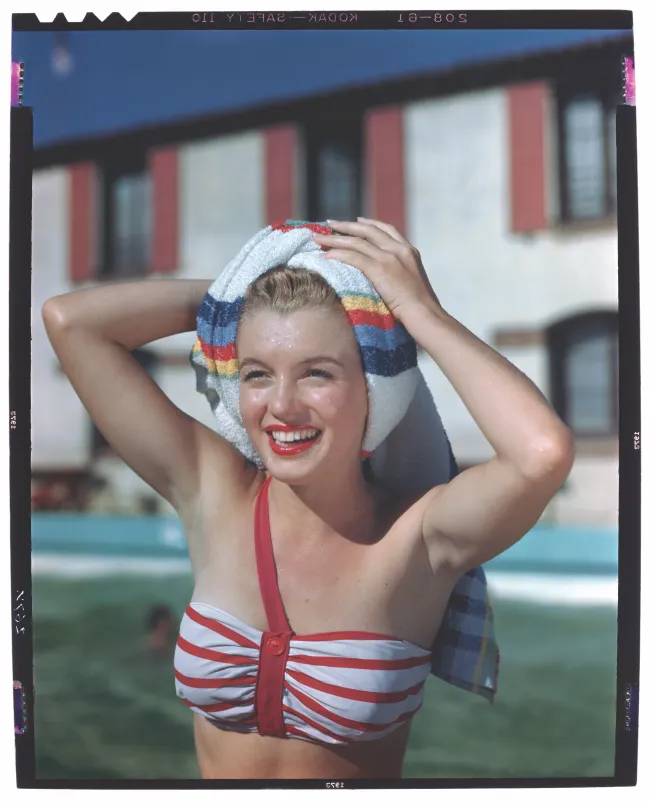
“The Marilyn Monroe Century: From Norma Jeane to Icon―A Story in Photographs” (out May 19) takes a deeply personal journey through the icon’s life, as captured in rare photos by photographer Bruno Bernard that have never before been released. Authors Joshua John Miller (Bernard’s grandson) and Mark A. Fortin open the photographer’s archive to trace “the emotional and artistic evolution of Norma Jeane Mortenson into Marilyn Monroe. More than a collection of photographs, ‘The Marilyn Monroe Century’ unfolds as a cinematic narrative. Bernard was the only photographer who witnessed and helped shape the full arc of Norma Jeane’s metamorphosis into Marilyn Monroe,” per the publisher.


Bernard and Monroe’s friendship as told through previously unavailable diary entries paints a portrait of a rich friendship that can reveal even more about the elusive star.
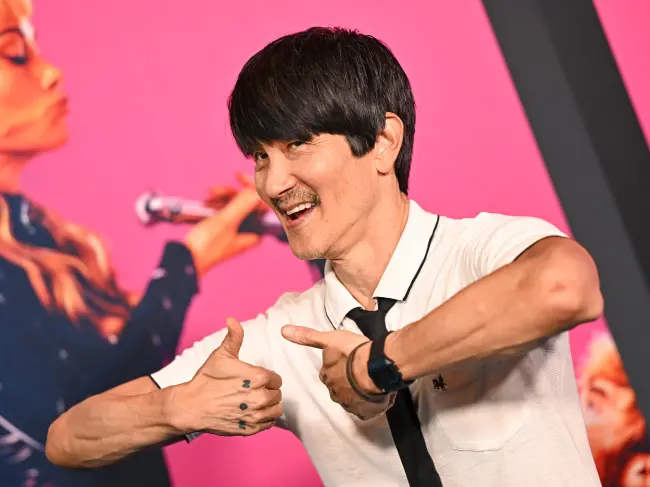
Voices including Sean Baker and Rose McGowan are featured in the book, and below, IndieWire exclusively debuts an excerpt from Miller’s conversation with the Oscar winner about the thin line between objectification and empowerment, the Marilyn Monroe connection in “Anora,” and more.
Read the excerpt below. “The Marilyn Monroe Century: From Norma Jeane to Icon―A Story in Photographs” publishes on May 19.
JOSHUA JOHN MILLER: I’ve been traveling the world recovering lost negatives. Back then, photographers would take pictures, send them out to agencies to sell, and who knows what happened to them in archives. They disappeared, ended up in the wrong hands, or just deteriorated.
SEAN: Right now I’m looking at that guy in the Don Lee television shot — his sandals pop, you know?
JOSH: Yeah. A lot of the Marilyn stuff was the best preserved, thankfully. That’s not the case for everything, especially the Palm Springs Marilyn negatives — so many are still missing. But we’ve been lucky to relocate a lot of them, and they’re in fantastic shape.
SEAN: Is the Racquet Club still around in any form?
JOSH: The Racquet Club is still there. I just went a couple of weeks ago. It’s walled in and abandoned, sitting like a giant, empty dinosaur—the bones of a long-dead animal. Let’s just say I’m trying to do something with it, maybe. You will see in our chapter, there are pictures from the Racquet Club taken last year I see these final images as the end of Hollywood — the last vestige of that golden era.

I wanted to focus on this as my first point of entry because when I think about the women in your films … Well, two things. First, the movies you watch and post about on Instagram often feature women who portray their sexuality very comfortably on camera. Sometimes people compare these portrayals to the works of Russ Meyer or classic sixties and seventies cult films dealing with female sexuality. There’s often a celebration of sexuality but also a sensationalist aspect.
My grandfather Bruno was clearly very comfortable photographing female sexuality. He saw it as empowering rather than objectifying. I think that’s interesting, because the women in your work—and the trans women in films like “Tangerine,” for example—feel similar. They exude empowerment rather than objectification. With “Anora” especially, it feels like the apex of this kind of portrayal.
I also know you’re a film historian, so I was thinking about post–World War II cinema and the culture of that time. What would Palm Springs have meant to people back then? And then I started thinking about Norma Jeane. When I saw “Anora,” I couldn’t help but feel this Norma Jeane quality. She doesn’t look like her, but there’s something about women on the margins looking in from the outside. That’s who Norma Jeane was when she was at the Racquet Club. She was suicidal and had just lost her second contract. The first one came through a picture Bruno had taken. Then she lost the Columbia contract and was really feeling low. That weekend in Palm Springs with Bruno — where those pictures were taken — was a turning point. That’s when Bruno introduced her to Johnny Hyde, who became her lover. That meeting changed the rest of her life.
SEAN: Oh, wow. Oh, wow. Those photographs are from that weekend?
JOSH: Yes, the Marilyn pictures are actually a combination of two weekends. And the little guy there — short in stature but long on connections — was Johnny Hyde. He didn’t become her personal agent, but was the head of William Morris. He got his nephew Norman Brokaw to be her agent. [Hyde] was also the one who encouraged her to have her chin and nose done, and to go even blonder.
SEAN: I didn’t know she had that done.
JOSH: My grandfather wanted her to retain the girl-next-door quality — peaches-and-cream complexion, innocence. But Marilyn was very determined to sexualize herself. She believed that her sexuality was her ticket and really pushed that narrative. Bruno fought against it because he wanted to preserve her natural, innocent appeal, but Johnny Hyde was fully supportive of her approach.
SEAN: Oh, that’s interesting. So, she was the one pushing it, yeah? That’s very interesting.
JOSH: Yes, the common narrative is that she was a victim, but she was very intentional about the choices she made. My grandfather documented everything — every conversation they had. He was obsessive about it, likely because he [had] lost everything in the Holocaust. His journals are filled with details about how they worked together to construct the Marilyn image.
SEAN: Was she an extrovert or an introvert?
JOSH: I think she was an introvert who forced herself to be an exhibitionist. I don’t think she could be herself publicly; she had to create a mask to navigate the world.
SEAN: Interesting. Yeah, I’ve seen that as a common thread among a lot of highly sexualized starlets. Sometimes it’s their way of exploring something they’re not, using the sexuality of their public persona to create something different. That’s really fascinating.
JOSH: It makes me wonder about how people — third parties, audiences, or even artists — interpret the female form. Artists, male or otherwise, often present it in ways that can be perceived differently. It’s a combination of celebrating sexuality while also playing into certain fantasies. The line between empowerment and objectification can be very fine.
SEAN: I’m trying to wrap my head around this. I just heard someone talking about “The Substance” today and how they felt it wasn’t obvious enough about its message. They argued that the film, in some ways, did exactly what it was preaching against by playing into prurient desires. But what I find cool about “The Substance” and other art that works is when it rides that line. It both empowers and satisfies those looking for objectification. It’s doing both at the same time.

JOSH: That’s very interesting. I didn’t experience that with the movie, but I can see where that fine line exists. For me, it sometimes felt like the message was overextended, but I loved the film enough to go with it. I’m curious, though — as a director, how much responsibility do you feel when portraying something like a young woman who is a stripper or a sex worker? How do you balance that? Bruno always felt a tremendous amount of responsibility about not oversexualizing anyone.
SEAN: I was very aware of it, especially with Mikey [Madison, star of “Anora”]. We became close friends, and I was mindful of how this role might change her life and how she would be perceived moving forward. It wasn’t just one question; it was several that I asked myself daily — sometimes hourly — during the shoot. What does each shot say? What is it doing? At what point does it become voyeuristic? At what point does it satisfy a teenage boy’s fantasy rather than serve the story?
We talked about it a lot, and [“Anora” cinematographer] Drew Daniels was deeply involved. For handheld scenes, I relied on his maturity behind the camera to avoid leaning too heavily into a male gaze. There were moments where we intentionally embraced the male gaze to make a point, but those were deliberate choices.
For example, in the scene where Mikey does the striptease, we debated whether to film it as a wide, static shot for objectivity or to shoot it like an eighties Mötley Crüe music video. Ultimately, we chose the latter. It was important for the film to mix tones — to challenge the audience and force them to see the world through the perspective of a client or a voyeur. It was uncomfortable but intentional.
JOSH: Some of the pictures at the Racquet Club, like the ones of Norma Jeane in a two-piece bathing suit, were scandalous for their time. It’s fascinating because my grandfather and [Alberto] Vargas essentially created the pinup style. That’s an entirely different book — [my grandfather’s] pinup photography was campy and tongue-in-cheek, almost veering into Russ Meyer territory. Interestingly, he and Meyer were friends.
When you look at Norma Jeane in those early pictures, she’s not the Marilyn we know. What do you see when you look at those images? Do you see Norma Jeane, or do you see the beginnings of Marilyn?
SEAN: It’s interesting because I see the early stages of what she would become. In the first color photo on the diving board, there’s a pose — hands on her hips — that says, “Look at me. Here I come.” It’s like she’s announcing herself to the world, even though she hasn’t fully arrived yet. In the later shots, with Johnny Hyde, there’s more confidence—an “I’ve arrived” energy. You can see a shift between the weekends when the photos were taken.
JOSH: Exactly. Bruno wrote in his diaries that on those weekends at the Racquet Club, people were drawn to her. Women were jealous, and men couldn’t take their eyes off her. She had this magnetic energy. Bruno said she was the best model he ever worked with — completely natural and in control. She even started directing him, moving and posing instinctively in ways that told him exactly how to capture her.
My grandfather always felt that the war within her was Norma Jeane versus Marilyn—the internal conflict. You have this persona to navigate the world, but what happens when the mask takes over, when you lose yourself entirely to the persona you created to become famous? That’s a classic Hollywood story. It’s not just about being lost—it’s about being lost in the person you became, someone who wasn’t even real to begin with. It’s like drag, in a way. The inability to reconcile who she was with who she had to become—that’s what ultimately destroyed her.
SEAN: One hundred percent.
JOSH: I think her biggest struggle — and I’ve seen this with a lot of beautiful women — was that she wanted to be taken seriously. The world tends to put beautiful women in a box and dismiss their intelligence. It’s like, “You’re beautiful, but you can’t have a brain.” It’s absurd that this is still a struggle for women.
SEAN: Absolutely. It’s such a sad, sexist expectation — or lack of expectation — that you can’t be both beautiful and smart.
JOSH: Exactly. Take someone like Courtney Love. People dismissed her, but she’s one of the smartest, most well-read people I’ve ever met. The fact that she was [both] sexy and smart wasn’t “allowed.”
SEAN: Right. It’s still a combination that’s not appreciated or expected, which is infuriating.
JOSH: But I think culture is changing. Films like “Anora,” “Babygirl,” “The Substance,” and others are reopening the conversation about sex and sexuality. After MeToo, things were too raw for a while, but now we can approach these topics again. Pinup photos, for instance, can be dismissed as objectifying. But I look at my grandfather’s work and see empowerment. These women wanted to be there. They were in control.
SEAN: Yeah, and hearing that backstory changes everything. People often assume victimization when it’s not the case. They question the narrative and project assumptions.
JOSH: As a filmmaker, what draws you to women’s stories? My grandfather loved photographing women, not to date them, but to tell their stories. What about the interior life of women inspires you as a storyteller?
SEAN: I’m not one hundred percent confident I can do it justice, which is why it interests me. It’s the challenge of exploration, with the hope of achieving proper representation. Being a man, I know I’m not automatically going to get it right. For me, it’s about diving into that exploration and learning along the way.
JOSH: Exactly. My first novel was filled with female characters inspired by the women who raised me. I’ve always been drawn to writing about women, and I don’t think that’s off-limits for men. Some of the greatest storytellers have explored lives outside their own. As Meryl Streep once said, playing roles that aren’t your own is how we develop empathy for others. It’s how we grow.
SEAN: One hundred percent. And when it comes to representation, it’s about empathy. A humanist approach — understanding that your audience is diverse. It’s about choosing the right person for the story, period.
JOSH: One last question. Do you think Hollywood’s golden era is over?
SEAN: It feels that way. There’s no doubt we worshiped a different kind of celebrity back then. Real movie stars. Now, with TikTok and social media, talent isn’t always a prerequisite. But then I look at moments like the “Anora” New York Film Festival after-party. It felt by the numbers at the time, but when I saw photos afterward — Paul Mescal with a drink, Mikey and Mark [Eydelshteyn] — I realized those images could age into something iconic like the pictures in your book. They had that mysterious, timeless quality, like photos from Hollywood’s golden era. It’s funny how things can feel different in hindsight.